
I Explored Japan’s Haunted Suicide Forest | Aokigahara Blog
They say this forest is haunted.
I don’t know if that’s true—but I came here to find out.
At the base of Mount Fuji sits one of Japan’s most misunderstood places: Aokigahara Forest. Known globally as “the suicide forest,” it carries a reputation darker than almost anywhere else in the country. But once you step inside, the question that follows you isn’t about ghosts.
It’s this:
Is it fear that draws people here—or curiosity?
Why I Came to Aokigahara
This wasn’t originally on my itinerary.
My Mount Fuji trip was supposed to be about views, lakes, and sunrises. But when clouds erased Fuji from sight, the forest suddenly made sense. Aokigahara sits directly at the mountain’s base, formed centuries ago after volcanic eruptions buried entire villages in lava.
Over time, life returned.
What grew back is hauntingly beautiful.
A Serious Moment Before Going Further
Before anything else, this matters:
If you or someone you know is struggling with thoughts of suicide or deep emotional distress, help is available.
United States: Call or text 988 (Suicide & Crisis Lifeline)
Outside the U.S.: Please search for your country’s suicide prevention hotline
You are not alone.
Your life matters.
This hike was never about glorifying tragedy—it was about understanding, respect, and reflection.
First Steps Into the Forest
I changed into hiking shoes, layered up, and parked at one of the main trailheads. The lot was almost empty.
Snow covered the ground. Ice hid beneath it.
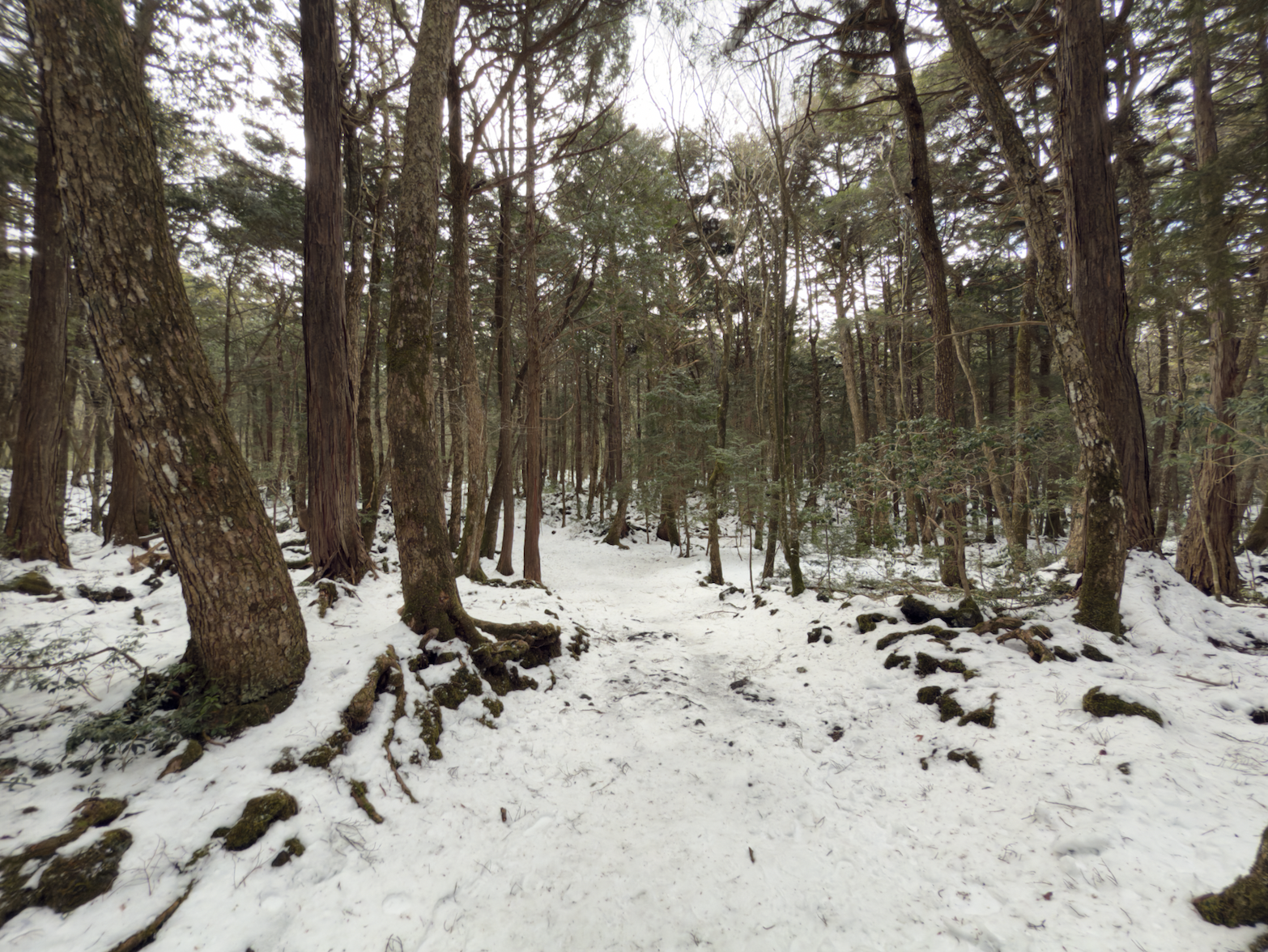
Most online photos show Aokigahara as lush and green. In winter, it’s quiet, white, and still alive—just differently.
Within minutes, tourist noise from the nearby caves disappeared.
I was alone.
Silence, Not Fear
Contrary to its reputation, the forest isn’t loud or aggressive. There are no jump scares. No obvious sense of danger.
What you feel instead is silence.
Roots snake across hardened lava like veins. Moss clings to everything. Sunlight filters in softly, almost respectfully.
If you didn’t know its history, this would feel like any peaceful forest hike near Mount Fuji.
That’s what makes it unsettling.
The History That Lingers Here
Japan has a complex cultural relationship with death—one shaped by centuries of history, honor, silence, and stigma.
For decades, suicide wasn’t openly discussed. That silence made it harder for people to ask for help. Aokigahara became associated with despair not because of nature—but because of human suffering layered onto it.
The government eventually stopped releasing numbers. The forest’s name spread worldwide.
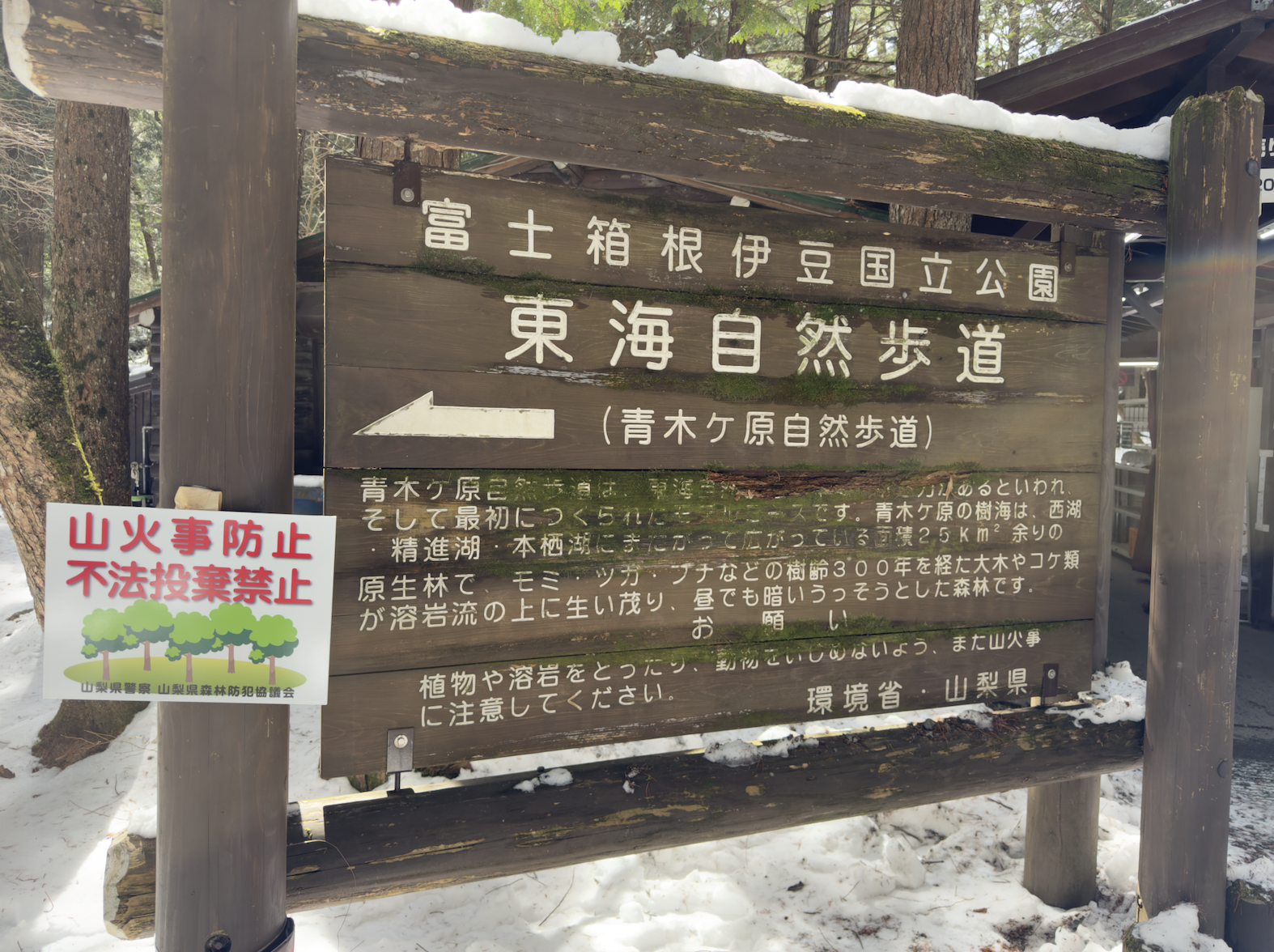
And yet, when you walk here today, you mostly see prevention signs, trail markers, and information about the ecosystem.
It’s a place trying to heal.
Hiking Alone (And Why I Was Okay With It)
Many people warn against hiking here alone.
I hike alone often.
With proper preparation, downloaded maps, and respect for conditions, the danger here wasn’t supernatural—it was ice. Without traction spikes, progress was slow and deliberate.
I turned back earlier than planned.
Not because of fear—but because safety matters.
What I Felt (And What I Didn’t)
I didn’t feel haunted.
I didn’t feel watched.
What I felt was reflective.
This hike stirred thoughts about mental health, people I know who’ve struggled, and those who’ve survived. It reminded me that depression doesn’t look the same everywhere—and that nature can hold grief without causing it.
This isn’t a place you “check off” a list.
It’s a place you sit with afterward.
📍 Google Maps: Aokigahara Forest & Access Points
If you plan to visit, save these locations ahead of time. Cell service is limited, and navigation matters.
Aokigahara Forest (main forest area)
Important tips:
Download offline maps
Wear traction in winter
Stay on marked trails
Treat this place with respect
🎥 Watch the Full Video on YouTube
This blog captures the reflection — but the full experience is in the video.
In the vlog, you’ll see:
The forest in winter conditions
What the trails really look like
The silence, pauses, and moments between thoughts
Why this hike became more emotional than expected
Travel far — and take care of yourself.