
I Crawled Under Mount Fuji… It Was Freezing Down There
Everyone photographs Mount Fuji from the outside.
The snow-capped peak.
The lakes.
The postcard views.
But today, I did the opposite.
Instead of looking at Mount Fuji, I went under it—deep into the lava tunnels, wind passages, and ice caves hidden beneath Japan’s most famous mountain. Down there, it’s dark, slippery, and cold enough that some of the ice has been frozen for centuries. This is what it’s really like to explore below Mount Fuji.
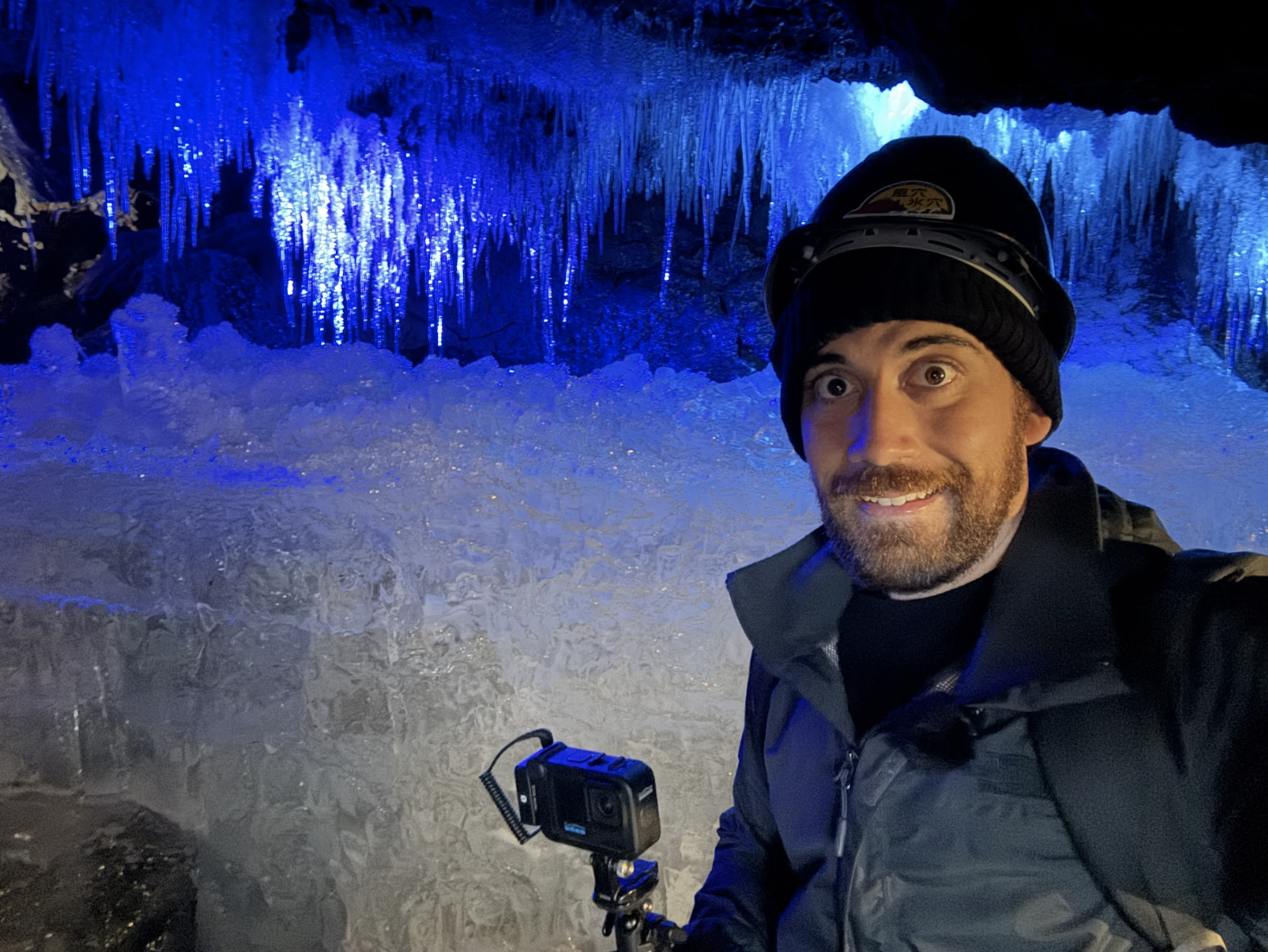
Going Underground at Mount Fuji
My afternoon started like any other Mount Fuji adventure—trail signs, muddy paths, and weather that changes by the minute. Thanks to offline maps and clear signage, I made my way toward the cluster of caves near the forest at Fuji’s base.
Within minutes, I realized this wasn’t a casual walk.
Ice covered the ground.
Mud hid underneath snow.
Every step mattered.
And yet, people of all ages were doing it—which was reassuring… and slightly terrifying.
First Stop: The Wind Cave
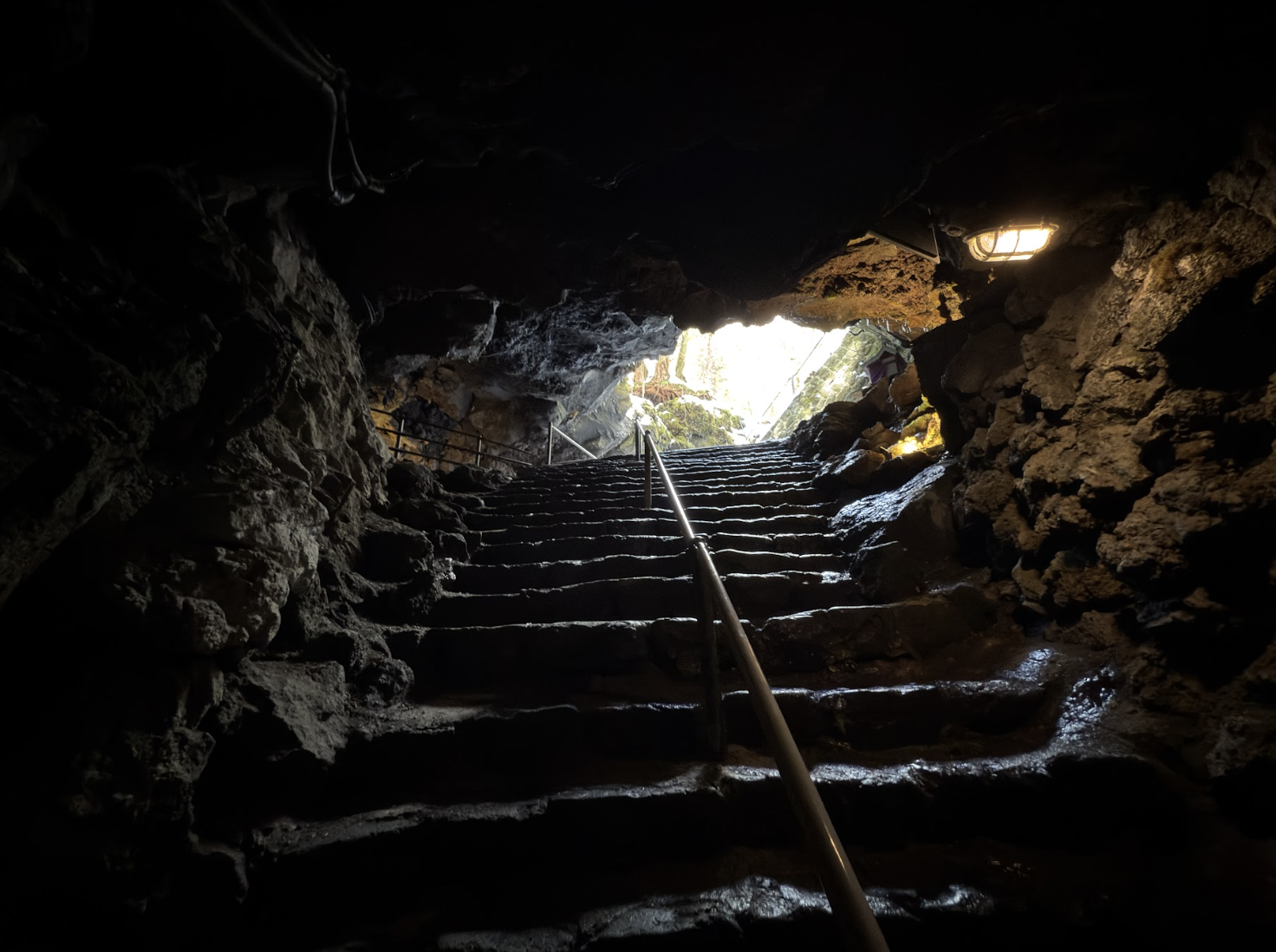
The Fugaku Wind Cave is essentially a natural refrigerator formed by Mount Fuji’s lava flows.
Before modern electricity, locals used this cave to store ice year-round.
Inside, the cave is:
Narrow
Low-ceilinged
Extremely slippery
Helmets are provided for a reason. I hit my head more than once—and was grateful every time I did.
Despite how cold it feels, the Wind Cave is well-lit and short. You can comfortably explore it in about 10–15 minutes total.
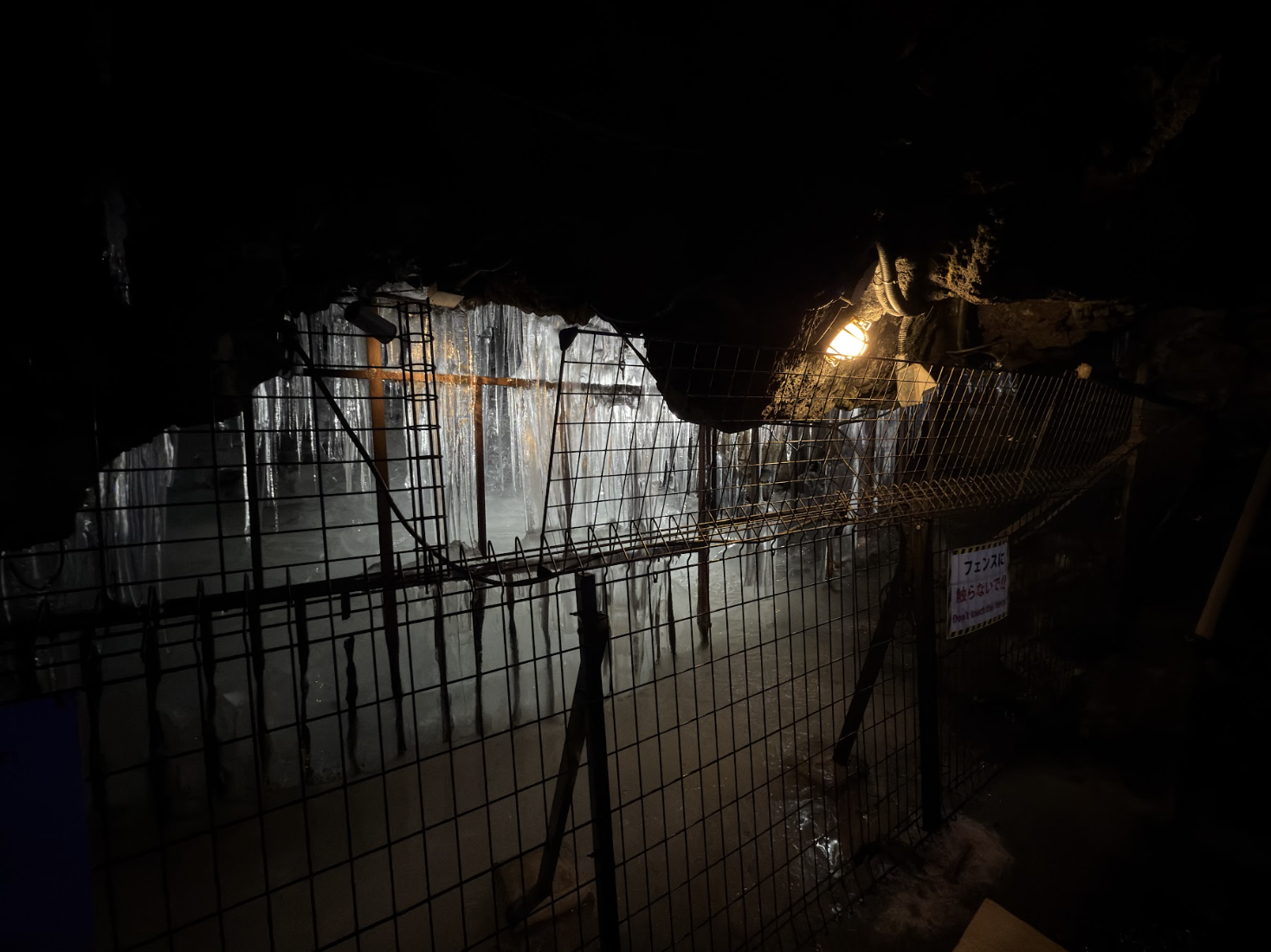
Why Helmets Matter (Seriously)
I’ve explored caves all over the world—from massive systems in Vietnam to remote underground chambers elsewhere—and here’s a rule I never break:
If a helmet is offered, wear it.
It’s not uncool.
It’s not optional.
And it will save your head.
Low clearance, uneven lava rock, and ice are a bad combination without protection.
The Ice Cave: Colder, Narrower, Better
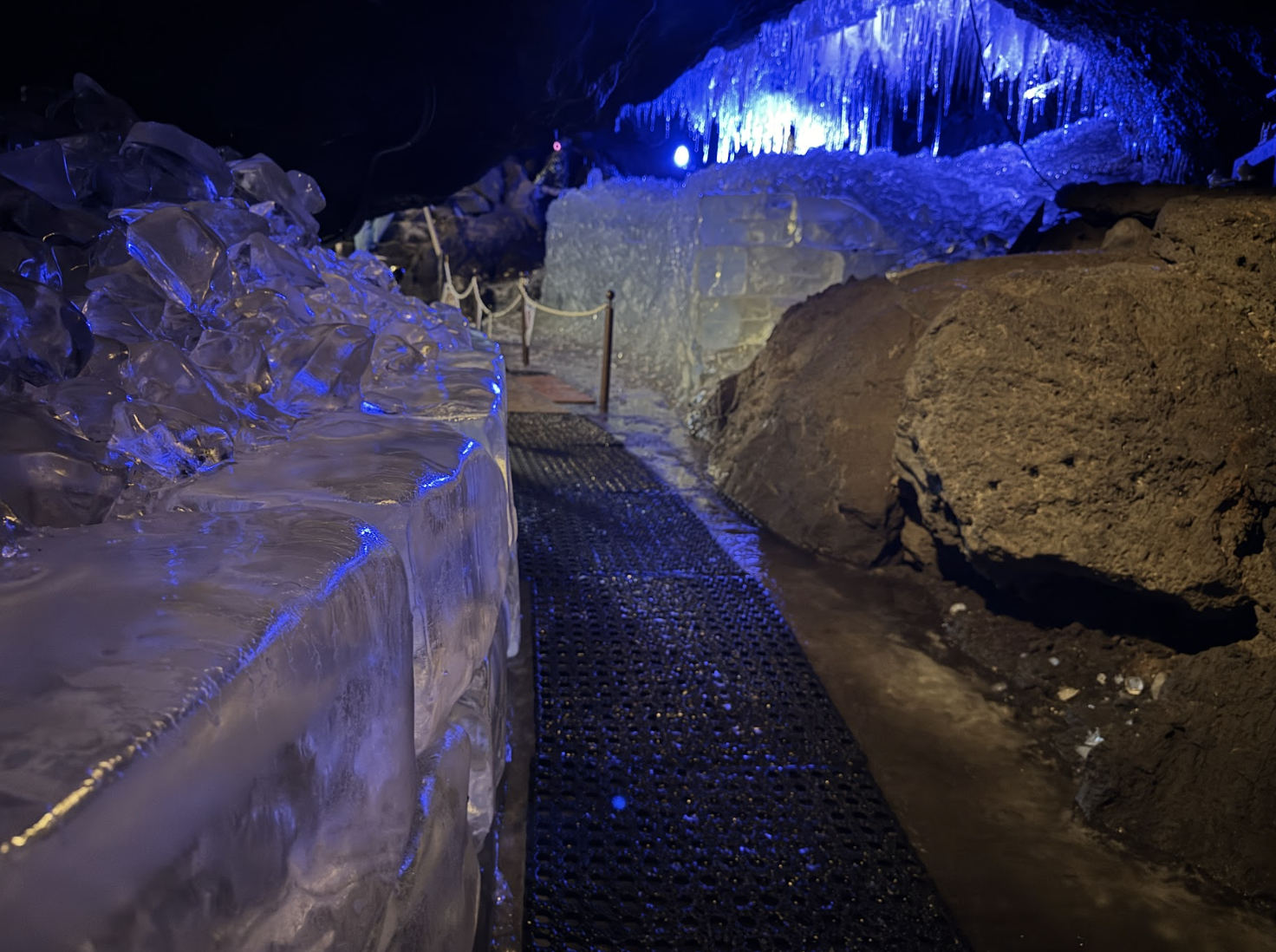
Next was the Narusawa Ice Cave.
This cave dates back thousands of years and holds ice that can survive year-round due to its unique airflow and structure.
Getting inside requires:
Descending steep, narrow steps
Ducking low enough that your backpack scrapes the ceiling
Moving slowly, deliberately, and carefully
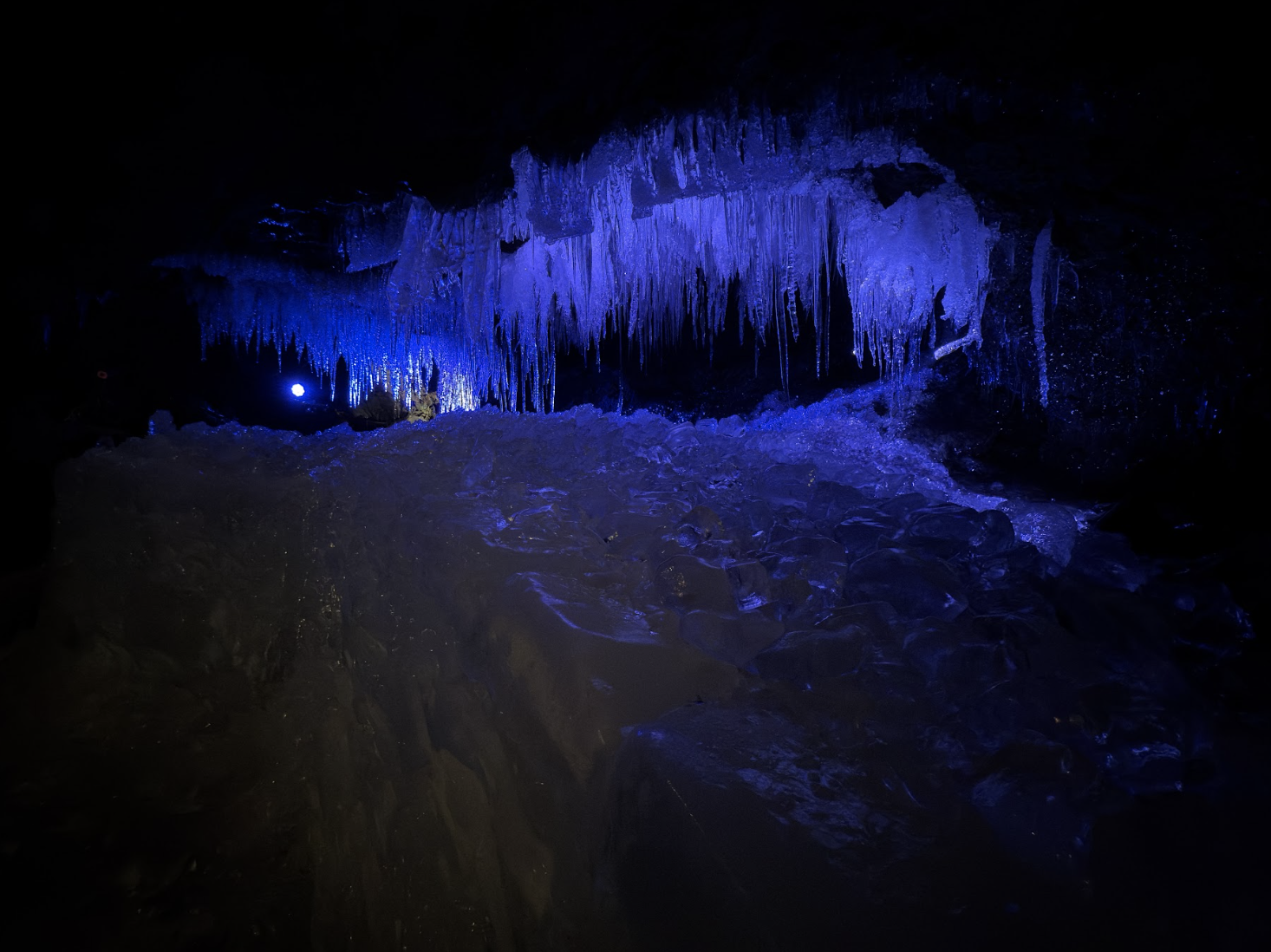
Inside, the temperature drops immediately.
Icicles hang from the ceiling.
The floor is solid ice.
Rubber mats barely help.
It feels unreal—like a movie set—but this is natural, ancient, and very real.
How Long Do the Caves Take?
If you’re short on time, don’t worry.
Wind Cave: ~10 minutes
Ice Cave: ~10 minutes
Walking between them: minimal
You can realistically do both caves in under 45 minutes, including entry, walking, and gift shop time.
The Environment Matters Down Here
One thing became clear fast:
When walking on ice, confidence causes slips.
If you move slowly, deliberately, and with intention, you’re fine.
The moment you relax, that’s when you fall.
Handrails are your friend. Use them.
Ending in the Warmest Place Possible
After crawling through freezing tunnels, the final stop was the gift shop.
Heat.
Souvenirs.
Warm air.
Honestly, it felt incredible.
Between the wind cave, ice cave, and surrounding forest trails, this ended up being one of the most unexpected Mount Fuji experiences of the trip.
Going underground wasn’t planned—but it’s something I’d absolutely recommend.
📍 Google Maps: Mount Fuji Caves & Access Points
If you want to visit these caves yourself, save these locations in Google Maps before you arrive. Cell service can be spotty, and icy paths aren’t the time to get lost.
Tip: Tickets are cash only, and the caves can close during severe weather.
🎥 Watch the Full Video on YouTube
This blog explains what it’s like — but the full experience is in the video.
In the vlog, you’ll see:
How tight and slippery the caves really are
What the ice looks like up close
Why helmets are non-negotiable
How cold it actually feels underground
Until the next adventure — travel far.