
Cusco Central Market – The Most Authentic Food in Peru?
Most travelers visiting Machu Picchu spend their time chasing scenic cafés and highly rated restaurants.
But if you really want to understand the food culture of Cusco, skip the tourist restaurants.
Go to the market.
Inside San Pedro Market, locals buy bread for the day, stock up on produce from the Andes, eat lunch together, and shop for ingredients that have been part of Peruvian life for generations. It’s loud, colorful, overwhelming, and sometimes a little chaotic.
And that’s exactly what makes it so good.
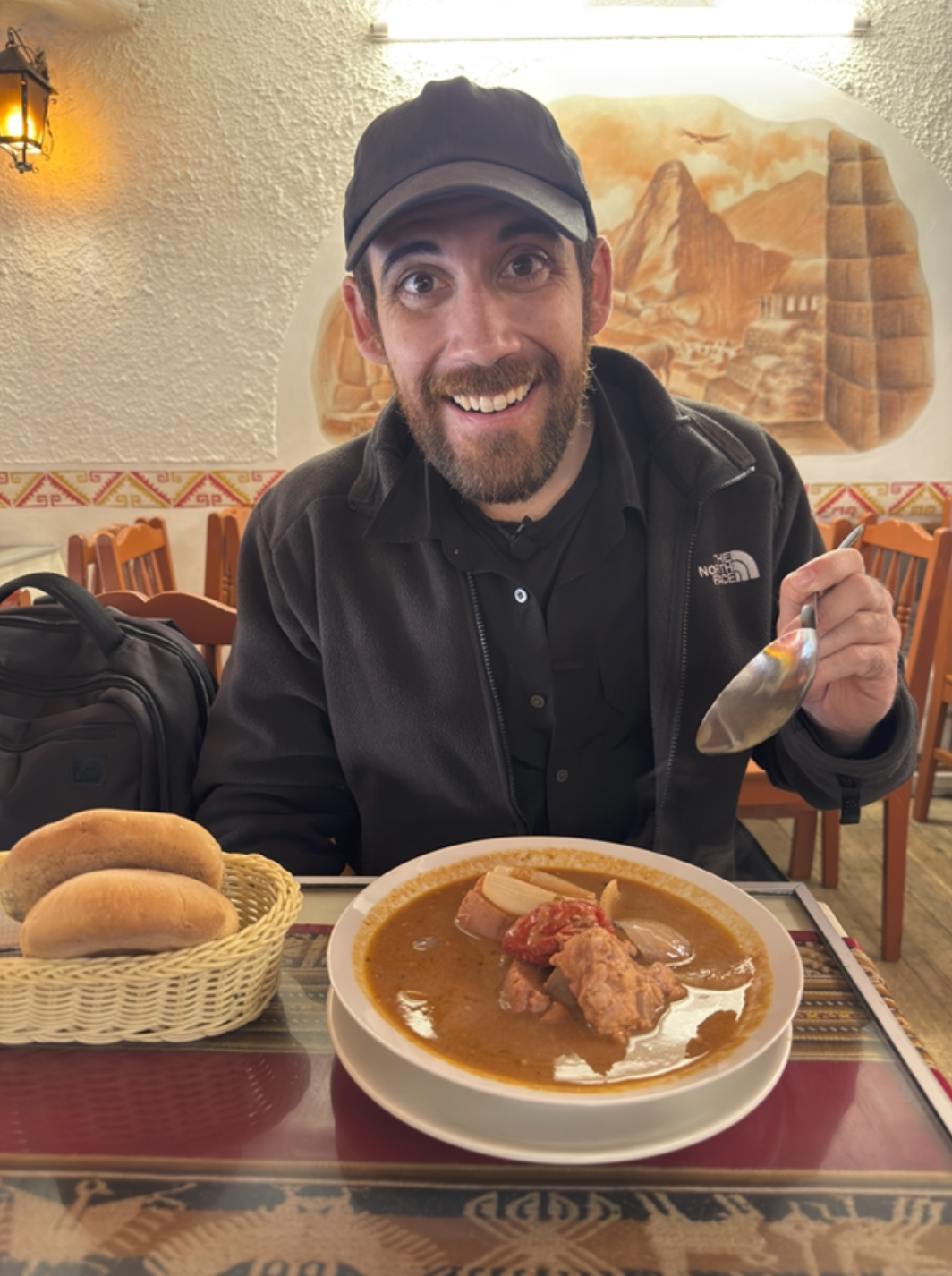
Welcome to San Pedro Market: Cusco’s Living Museum
San Pedro Market opened in 1925, making it nearly a century old.
Even before stepping inside, there’s a cool detail most visitors miss — the metal structure overhead was designed by the same company involved with constructing Eiffel Tower.
Once inside, the market unfolds section by section.
Bread.
Cheese.
Meat.
Potatoes.
Fruit.
Fresh juice.
Prepared meals.
Superfoods.
And even ritual and ceremonial products.
My guide Fabrizio called it a living museum, and after walking through it, I completely understood why.
The Juice Section Has 70 Vendors… Somehow
One of the first things that surprised me?
Juice.
Rows and rows of juice.
Apparently there are around 70 juice vendors inside the market.
At first that sounded absurd.
Then I reached the fruit section later and realized… maybe they actually need all seventy.
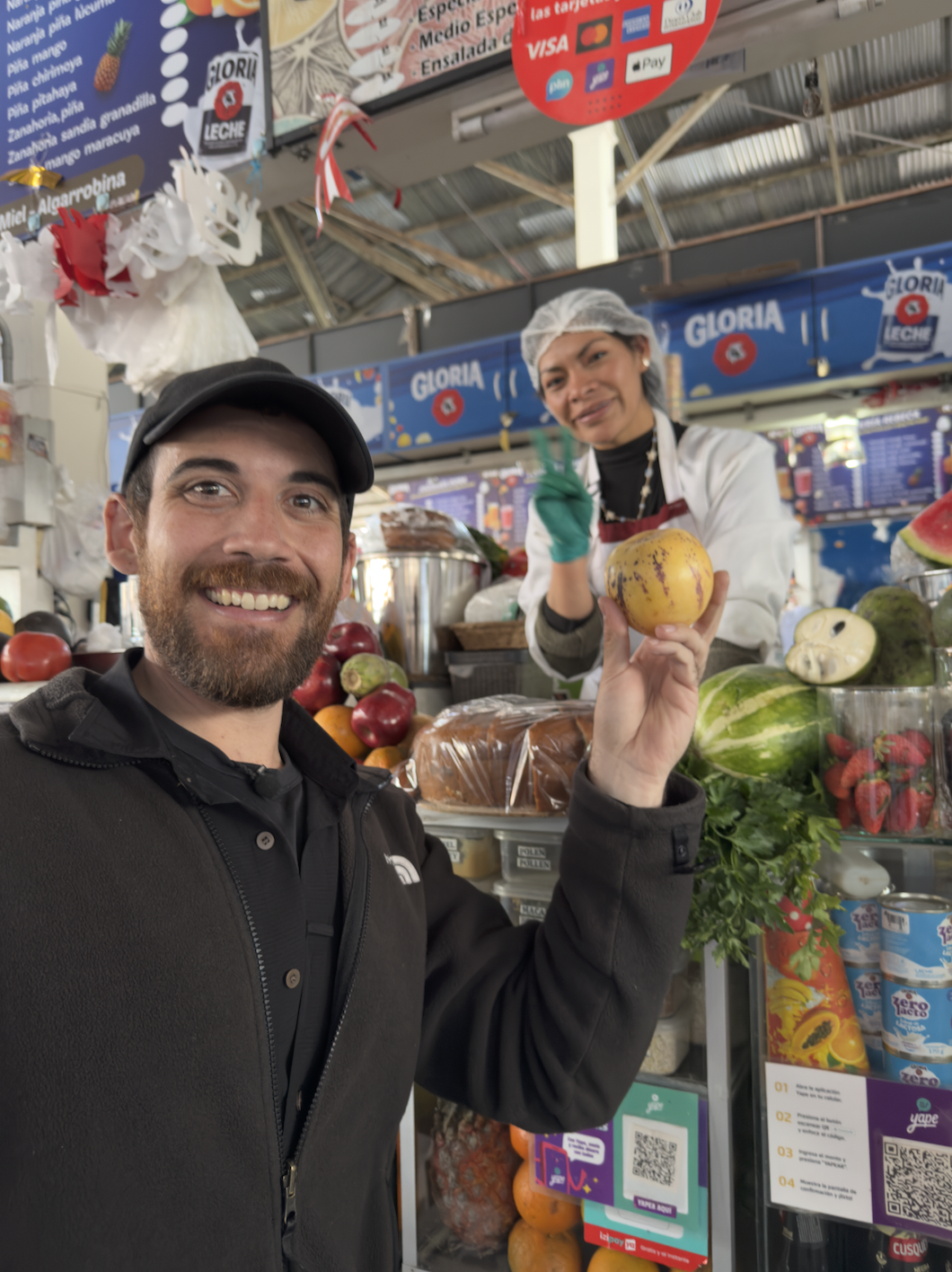
The Andes’ Natural Pharmacy
As we moved deeper into the market, Fabrizio introduced me to products native to the Andes.
Coca leaves.
Medicinal herbs.
Natural remedies traditionally used for altitude and mountain hikes.
I tried one traditional herbal mixture that locals smell to help open their breathing.
It felt like inhaling concentrated mint and eucalyptus at maximum strength.
For a few seconds my lungs felt brand new.
Pig Heads, Preserved Meat, and Ancient Food Techniques
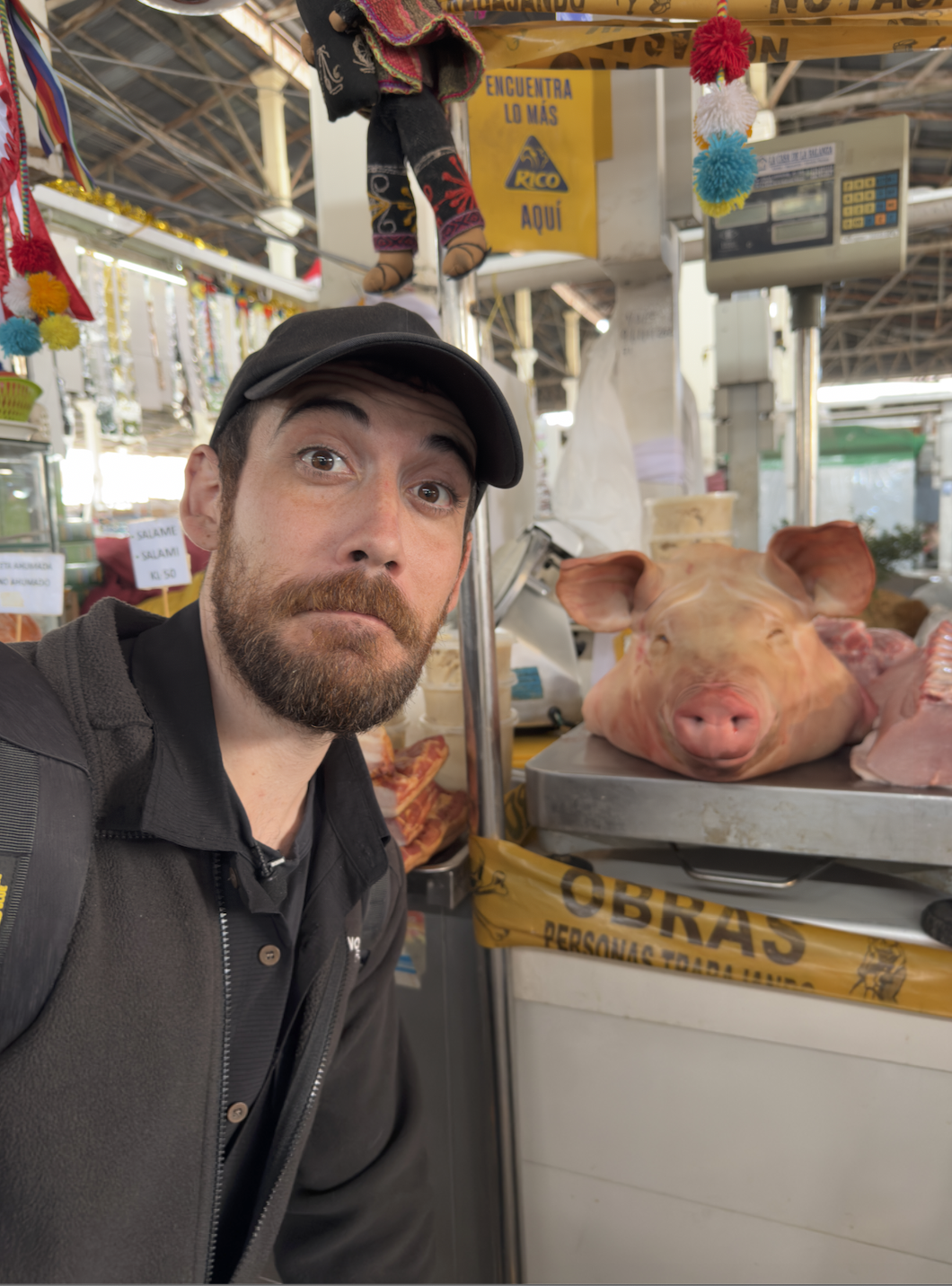
The meat section was… intense.
Rows of pig heads.
Traditional dried meats.
Ingredients that reminded me very quickly this was not designed for tourists.
One of the coolest things I learned was about Peru’s preservation techniques.
Some dried meats use salt, mountain air, and time to naturally preserve protein for six months to one year.
Honestly, it’s kind of genius.
The Black Magic Section Was Not What I Expected
Then the market took a hard left turn.
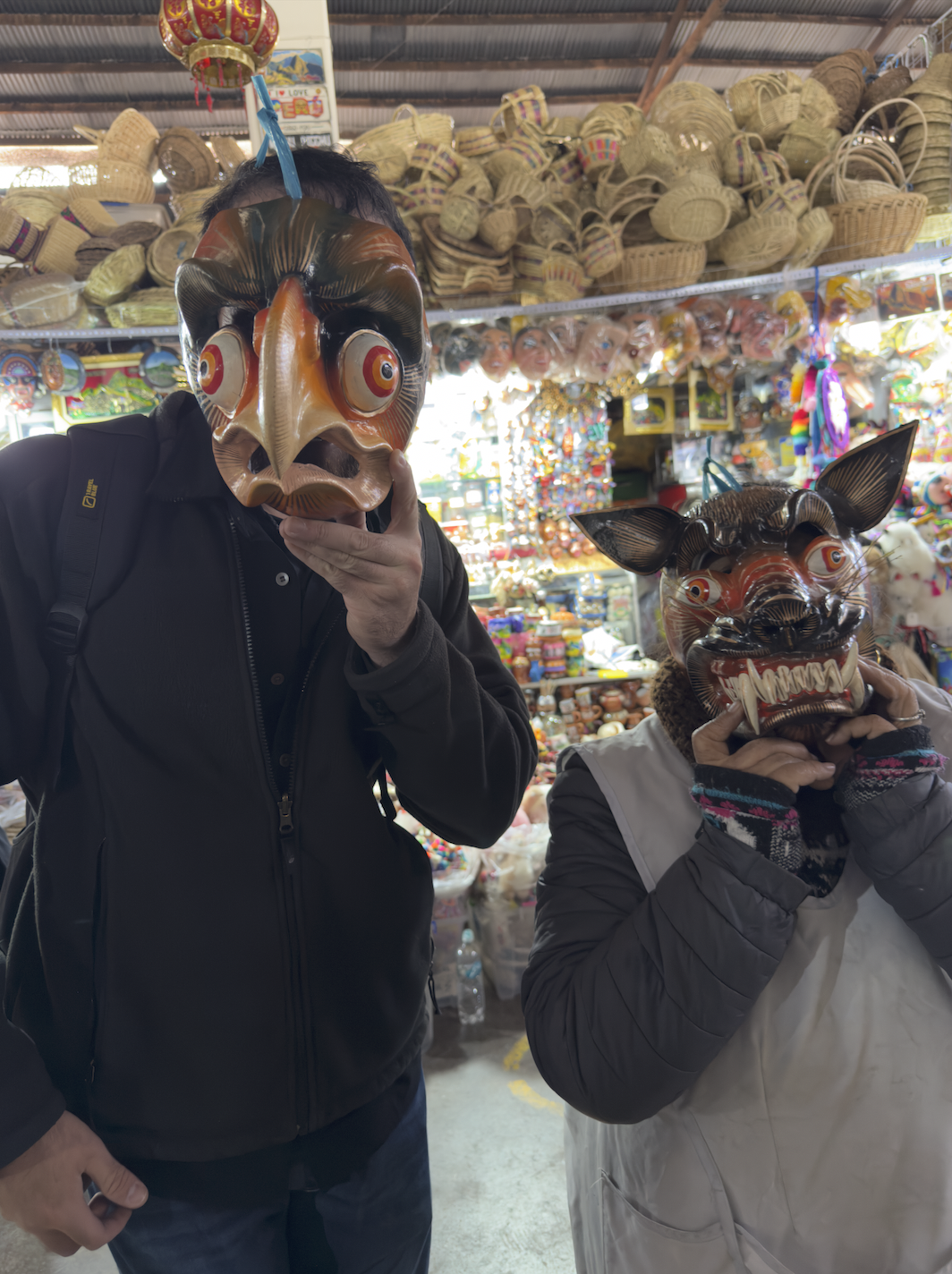
We walked into a section dedicated to ritual and ceremonial products tied to Andean traditions still practiced today.
Offerings.
Spiritual objects.
Traditional ceremonies.
Items connected to agriculture and fertility rituals.
Naturally this led to completely normal questions from me like:
Can I buy a love potion?
How much does a ritual offering cost?
And somehow…
A conversation about ayahuasca and disappearing into the jungle.
This market escalated quickly.
Peru Takes Superfoods Extremely Seriously
Next came one of my favorite sections.
Superfoods.
And apparently Peru doesn’t mess around.
There wasn’t just quinoa.
There was white quinoa.
Red quinoa.
Black quinoa.
Mixed quinoa.
Plus maca and a dozen other ingredients I’d barely heard of before.
Then Fabrizio handed me something strange.
“Guess what this is.”
My answer?
“A rotten potato.”
Turns out…
It actually was potato.
A traditional freeze-dried potato preservation method that can preserve potatoes for 5–10 years.
As someone who’s part Irish…
I immediately respected this.
Peru Has More Potatoes Than Should Exist
Then Fabrizio casually dropped this fact:
Peru has over 3,500 varieties of potatoes.
My response was basically:
“That’s too many potatoes.”
Apparently Peru even preserves potato genetics for the future.
I left realizing I’ve severely underestimated potatoes my entire life.
Cheese, Chili Peppers & Purple Corn
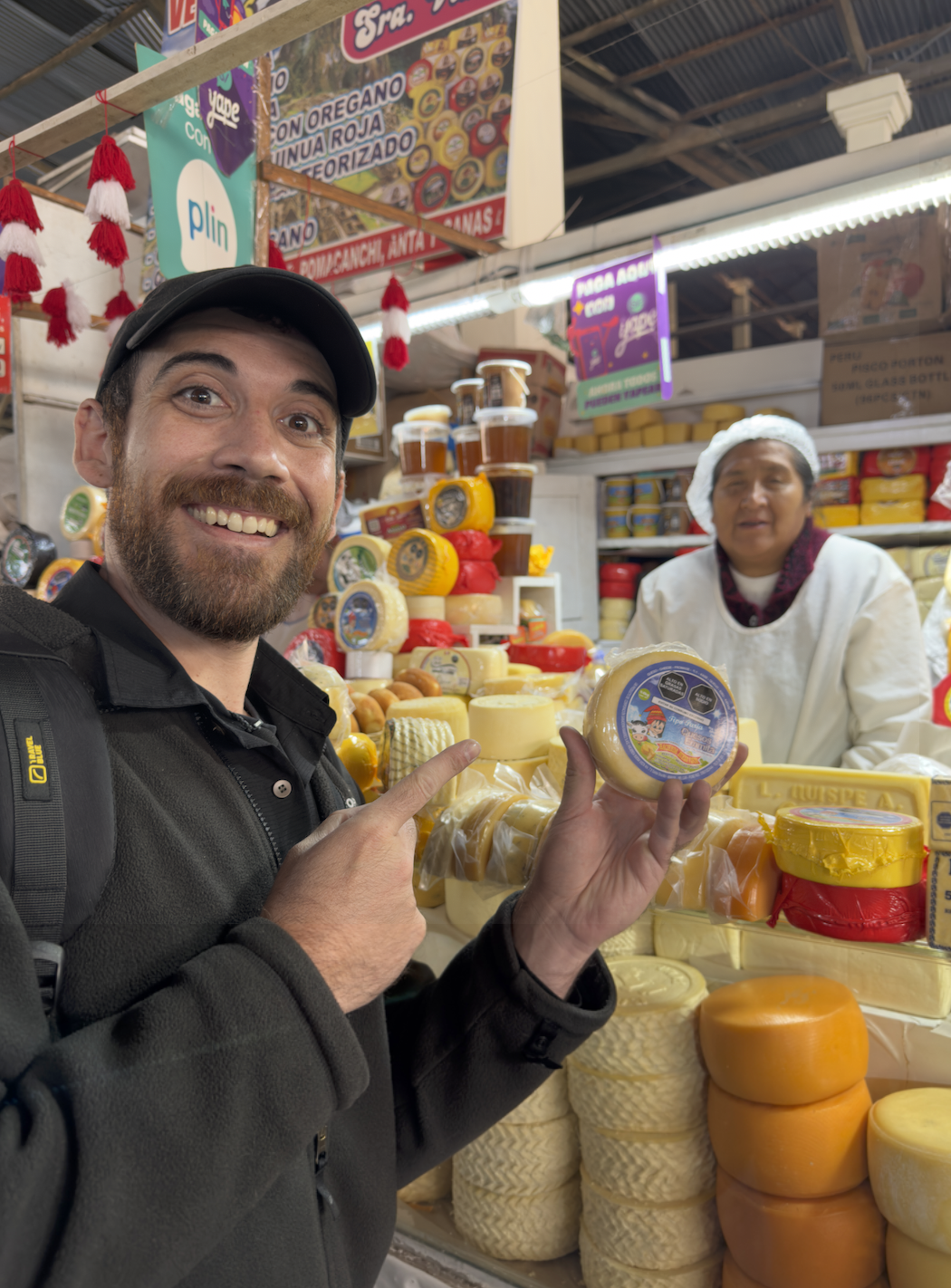
Next came local cheese tasting.
Some were aggressively salty.
Some tasted closer to Swiss.
One had oregano.
My American brain still wanted cheddar.
Then came Peru’s chili peppers.
What surprised me was that locals explained peppers aren’t always about heat — they’re often used more to build flavor.
We also learned about purple corn, one of Peru’s signature ingredients used in chicha morada, a refreshing drink found across the country.
The Fruit Section Completely Won Me Over
This ended up being my favorite area.
Bright colors.
Strange textures.
Sweet.
Sour.
Fruits I’d never seen before.
Some came from the Sacred Valley.
Others came from Peru’s coast.
Some were incredible.
Others were… not for me.
But honestly, that unpredictability became part of the experience.
Final Thoughts: Is San Pedro Market the Most Authentic Food Experience in Peru?
By the end of the day, I realized San Pedro Market isn’t special because every food tastes amazing.
It’s special because not everything does.
Some flavors surprised me.
Some confused me.
Some pushed me way outside my comfort zone.
But every stall had a story.
Every section felt connected to local culture.
And every interaction felt real.
If you’re visiting Machu Picchu, don’t just pass through Cusco.
Spend a few hours at San Pedro Market.
You might end up remembering it more than the ruins.
Book this experience with fabrizio
To book this experience, click HERE.
Google Maps
📍 San Pedro Market
📍 Plaza de Armas de Cusco
Watch the Full Video
🎥 Cusco Central Market – The Most Authentic Food in Peru?
Travel far.