
Behind the Scenes of the Son Doong Cave Expedition
The Part Tourists Never See
You think you know Son Doong?
Think again.
Most people only experience the polished version — the epic chambers, the underground jungle, the famous Great Wall of Vietnam. But there’s a whole world behind the curtain, a world that keeps this legendary expedition running day after day.
For this video, I went completely off the grid to see what really happens behind the scenes. I rode with the porters, toured the equipment facility, watched the cleaning crews rebuild every piece of gear, and even stepped inside the operations, sales, and marketing headquarters for Oxalis — the only company allowed inside Son Doong.
This is the cave story most people never see.
Riding the Porter Bus: A World Most Trekkers Never Enter
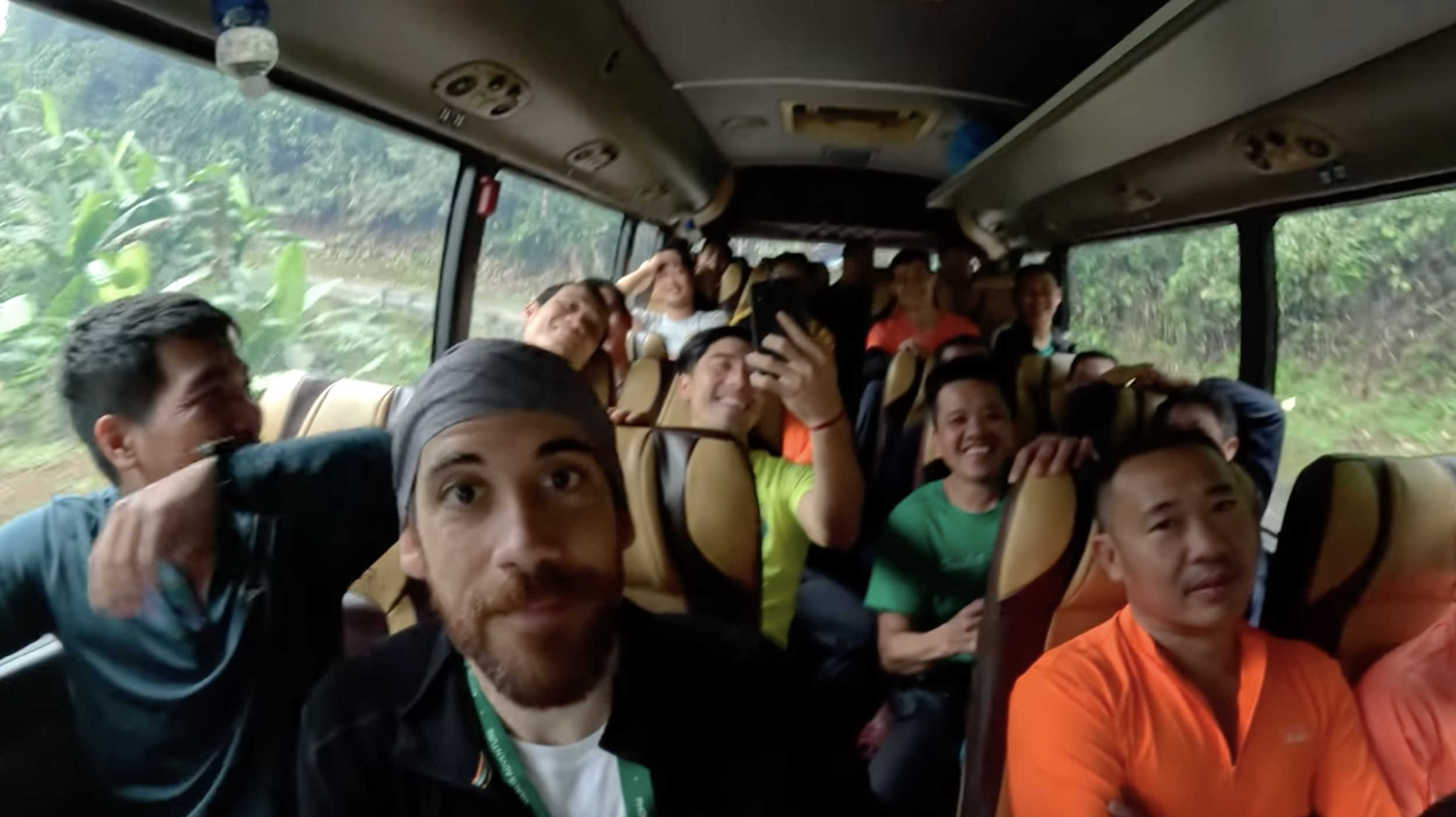
Son Doong Cave Porter Bus
This part of the day felt completely different from the rest of the expedition. Instead of joining the trekkers, I squeezed into a shoulder-to-shoulder bus with the porters and guides — the men who make the entire expedition possible, but who most guests never meet.
The second I stepped on, every head turned.
Not because I was the only foreigner.
Not because I was holding a camera.
But because no trekker has ever ridden this bus.
You could feel the curiosity. The quiet side conversations in Vietnamese. The half-hidden smiles. The “What is this guy doing here?” looks. I just laughed it off — for one short ride, I was a porter.
It smelled like sweat, effort, and six days of labor. This bus wasn’t for tourists. It was for the backbone of Son Doong.
The Hidden Workforce: 90+ People for 10 Trekkers
A lot of people think Son Doong is some simple guided hike. It’s not even close.
Here’s the truth:
Three rotating Son Doong crews
About 30 people per crew
90 people total, dedicated solely to this cave
And that doesn’t include backup staff, logistics, or support teams
All of this to safely guide 10 trekkers.
Oxalis also runs multiple other expeditions, which means the entire company is a nonstop machine — organizing, rotating, repairing, hauling, washing, feeding, and transporting.
And all of it felt invisible until I stepped on that bus.
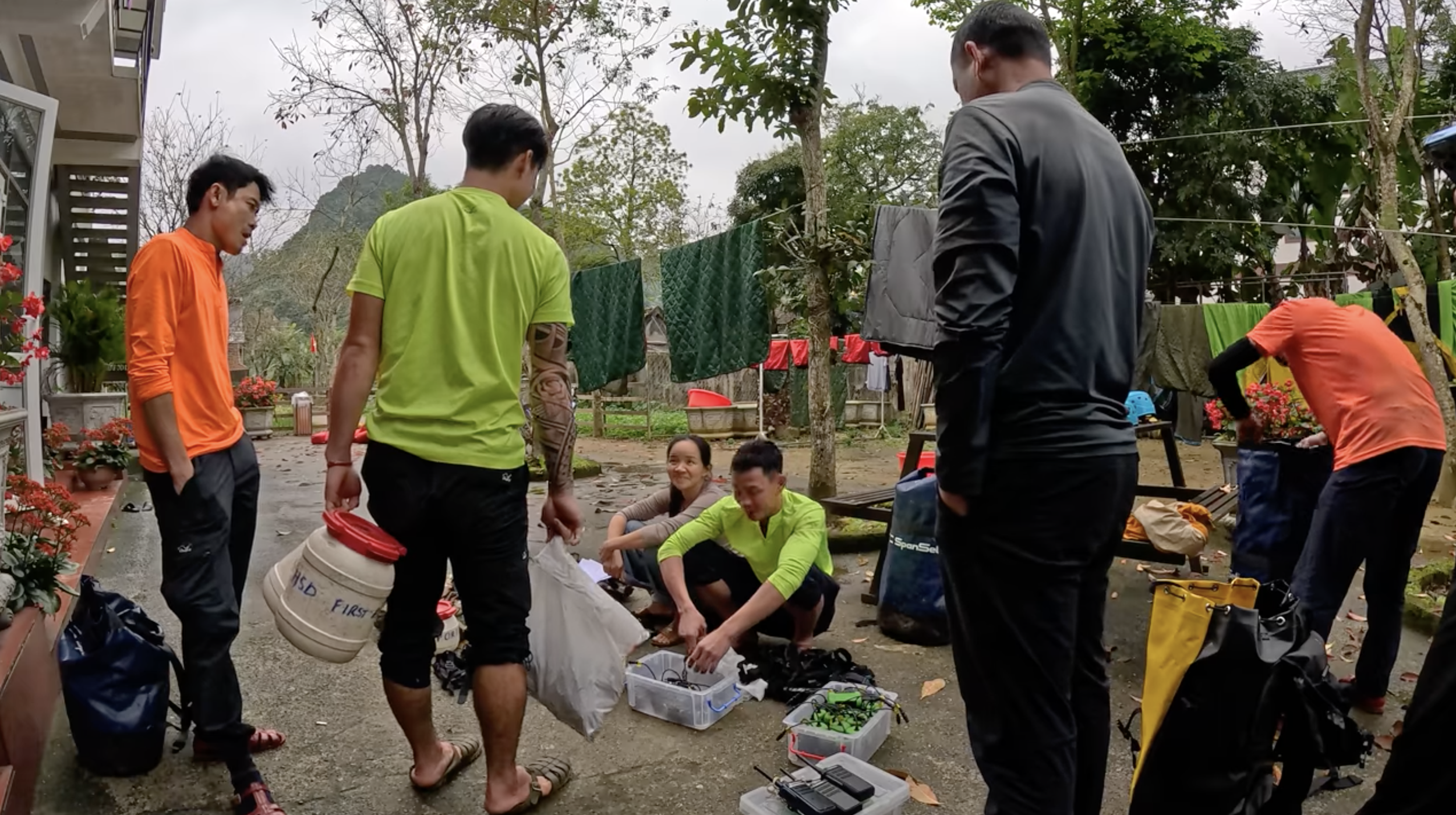
The Real Work Begins: Inside the Gear Washing & Repair Facility
We pulled into a separate facility far from the tourist areas — the hidden heart of the operation.
A mountain of gear came off the truck:
Muddy boots
Dry bags
Ropes
Helmets
Harnesses
Radios
Sleeping bags
Tents
Every single item was cleaned, disinfected, inspected, and reassembled for the next group. Nothing leaves this building dirty, damaged, or unchecked.
A mostly female crew handled the major cleaning and prep. They worked fast, efficiently, and with total precision — washing sleeping bags, testing headlamp batteries, inspecting safety lines, re-sorting ropes, and organizing equipment by category.
I was blown away. The smoothness. The rhythm. The intentionality. These are the real heroes nobody ever meets — the people who make sure your experience is safe, comfortable, and possible.
The Equipment Rooms: Where Son Doong Gets Rebuilt
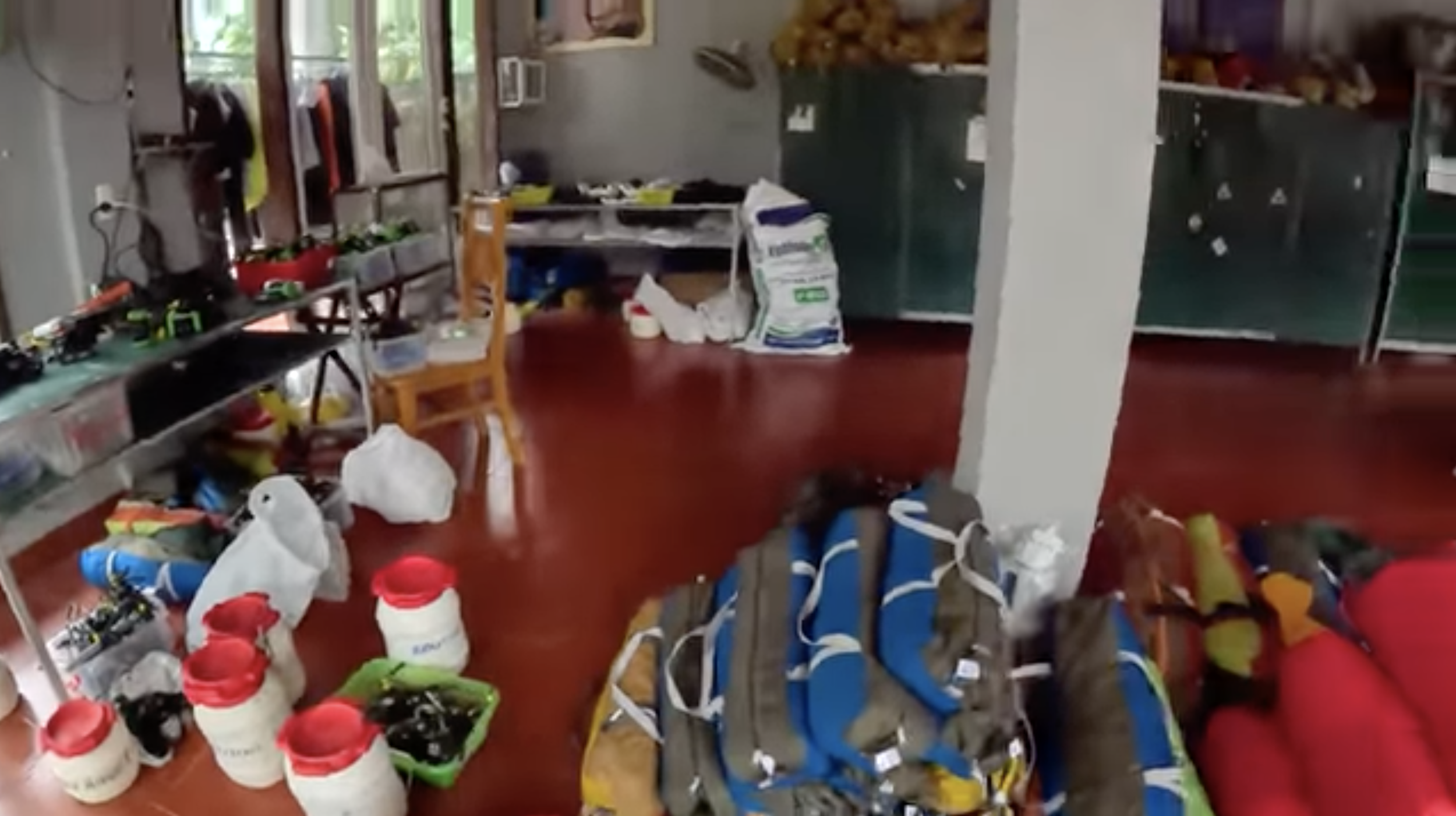
Son Doong Cave Equipment Room
They took me upstairs to see where everything is stored:
Rooms full of radios
Shelves of tents and sleeping bags
Racks of helmets
Stacks of batteries — thousands of them
Walls lined with ropes, harnesses, and safety tools
Every piece has a home. Every home has a system. And that system runs four expeditions a week. The amount of organization required is mind-blowing.
This is where the legend of Son Doong resets itself for the next adventure.
Inside Oxalis Headquarters: The Brain Center
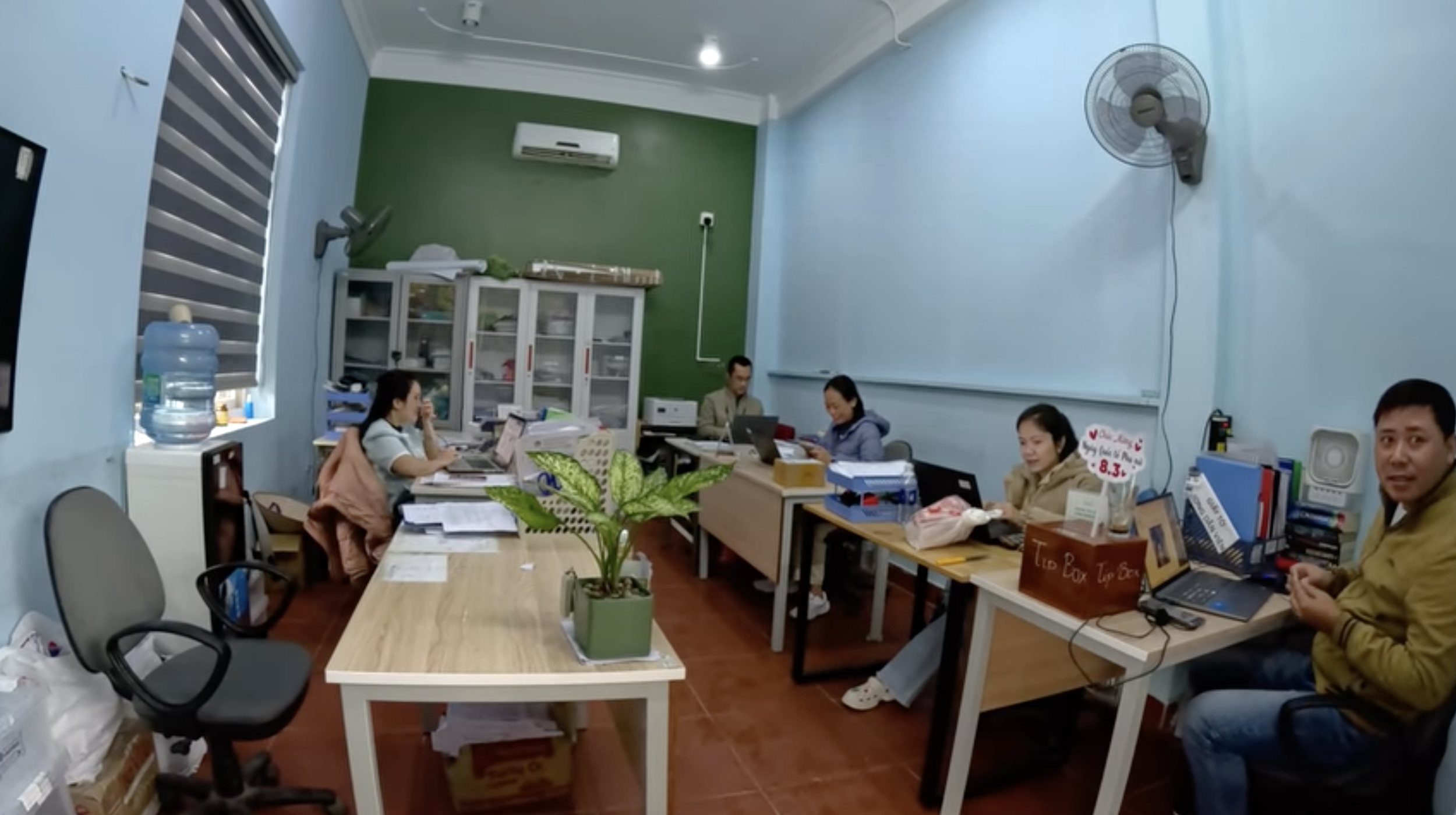
Son Doong Cave Office HQ
After the gear facility, I hopped on the back of a motorbike and headed to Oxalis headquarters — the beating heart behind every expedition.
Inside, I saw:
Operations team (handling logistics, emergencies, scheduling)
Sales team (booking tours, answering inquiries, managing demand)
Marketing team (content, branding, promotion)
Accounting (the numbers that keep it all possible)
Staff rooms for travelers arriving early in the night
Training areas where guides practice gear usage and rope systems
Everyone was surprised to see me. Most guests finish the tour and disappear. Nobody comes back inside the machinery. But every single person smiled, shook my hand, and shared their role.
Some had been working here:
7 years
10 years
12 years
Even 17 years
Longevity like that only exists where people truly believe in their mission.
Why This Changed Everything for Me
By the time I returned to the taxi to meet the other trekkers, my mind was buzzing.
I had just seen the cave’s heartbeat — the invisible system that makes Son Doong possible. And suddenly, the expedition meant even more.
The porters.
The safety team.
The cleaning crew.
The operations staff.
The marketers and sales teams.
The accountants.
The logistics workers.
It takes nearly 500 employees to operate Oxalis as a whole.
When you really see the effort, you stop viewing Son Doong as “a tour” and start seeing it as a giant, coordinated act of love.
I ended up tipping 20% of my total trip cost — and slipping an extra $20 to the safety expert who saved my life more than once.
If you ever do this expedition, tip well.
It matters more than you know.
Google Maps Links
📍 Son Doong Cave
📍 Oxalis Headquarters – Phong Nha
📍 Phong Nha Village
🎥 Watch the Full Video
Want to see how the world’s largest cave expedition really operates behind the scenes?
Watch the full Behind the Scenes of Son Doong vlog on YouTube — and discover the hidden world of porters, gear crews, office staff, and the massive logistics system that makes this adventure possible.
Thanks for reading — and as always…
Travel Far.